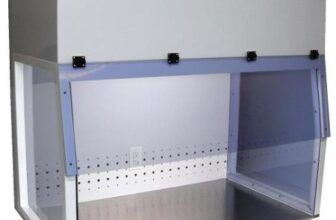
When you need a cleaner workspace for sensitive laboratory procedures, a benchtop laminar flow hood can provide controlled airflow and help reduce particulate contamination around your work. However, choosing the right unit requires more than comparing prices or dimensions. You need to evaluate airflow, filtration, workspace, construction, controls, maintenance, and compatibility with your application before making a purchase.
Start With Your Application and Workspace
Before comparing models, identify exactly what you plan to perform inside the hood. Laminar flow hoods are generally designed to protect your work from airborne contamination rather than protect you from hazardous chemicals or biological hazards.
Consider your procedures, sample sizes, equipment, and frequency of use. If you regularly handle sterile materials, assemble components, prepare samples, or perform contamination-sensitive processes, determine how much clean workspace you actually need.
Next, measure your available bench space. A benchtop unit should fit comfortably without blocking laboratory equipment, electrical outlets, ventilation paths, or operator movement. Also consider the height of the hood and whether you have enough overhead clearance for installation and maintenance.
Evaluate Airflow Performance
Airflow is one of the most important factors to review. A laminar flow hood is intended to provide a consistent stream of filtered air across the work zone, helping minimize turbulence and airborne particles.
Check the manufacturer’s airflow specifications and understand how air moves through the cabinet. Look for information about airflow velocity, uniformity, and operating conditions rather than relying only on a general “clean air” claim.
You should also consider how your work may interfere with airflow. Large instruments, containers, or unnecessary items inside the workspace can disrupt the clean-air pattern. Choose a configuration that gives you enough usable space without encouraging overcrowding.
Check the Filtration System
The filtration system directly affects the cleanliness of the working environment. When evaluating a unit, review the type and efficiency of the installed filter and determine whether replacement filters are readily available.
HEPA filtration is commonly used in laminar airflow equipment because it can capture very small airborne particles. However, filter efficiency alone does not tell you everything about performance. You should also examine airflow distribution, filter installation, sealing, and access for maintenance.
Ask how often the filter should be inspected or replaced and whether the manufacturer provides procedures for filter testing. A well-designed filtration system should also be practical to maintain over the equipment’s operating life.
Examine the Work Surface and Construction
Your work surface should match the demands of your laboratory. Stainless steel is often useful when you need a durable, smooth, and easy-to-clean surface. Examine the construction for exposed seams, difficult-to-clean corners, and areas where contamination could accumulate.
Pay attention to the interior dimensions as well. A wider workspace may be helpful if you routinely work with multiple containers or instruments, while a compact configuration can make more sense when bench space is limited.
Also inspect the front opening and access area. You should be able to work comfortably without repeatedly reaching awkwardly into the cabinet.
Review Controls, Lighting, and Operator Convenience
Good laboratory equipment should be straightforward to operate. Check whether the hood provides convenient controls for lighting, airflow, and other operating functions.
Internal lighting is particularly important when you perform detailed work. Make sure the illumination is sufficient across the entire workspace without creating excessive glare.
Noise is another practical consideration. If the hood will operate for several hours at a time, excessive fan noise can become distracting. Review the manufacturer’s sound specifications when available and consider how the unit will fit into your laboratory’s normal working environment.
You should also check whether the unit provides airflow indicators, alarms, or other monitoring features that help you identify operating problems.
Consider Cleaning and Maintenance
Before buying, think beyond installation. Your hood will require routine cleaning and periodic inspection to maintain a suitable working environment.
Choose surfaces that are easy to wipe down and materials compatible with the cleaning agents you routinely use. Ask how filters are accessed and whether maintenance can be performed without unnecessarily disturbing other components.
You should also confirm the availability of replacement parts, filters, and technical support. A lower initial price may become less attractive if routine maintenance is difficult or replacement components are hard to obtain.
Compare Specifications Before You Buy
Once you have identified your requirements, create a simple comparison checklist. Review each model for:
- Overall dimensions and available bench space
- Interior working area
- Airflow specifications
- Filter type and efficiency
- Work-surface material
- Lighting and controls
- Noise level
- Electrical requirements
- Cleaning and maintenance access
- Replacement filter availability
- Warranty and technical support
This approach helps you compare equipment according to your actual laboratory needs instead of focusing on price alone.
If you are comparing different benchtop laminar flow hood options for compact laboratory work, review the specifications carefully to determine which configuration aligns with your workspace and procedures.
You can explore available options from Global Lab Supply and compare equipment details before making your final selection.
Frequently Asked Questions
What should you check first when buying a benchtop laminar flow hood?
Start by identifying your application, required workspace, and available bench dimensions. Then evaluate airflow, filtration, construction, controls, maintenance requirements, and electrical specifications.
Does a laminar flow hood protect you from hazardous chemicals?
A standard laminar flow hood is primarily intended to protect the work from contamination. It should not automatically be considered a substitute for a chemical fume hood or biological safety cabinet.
Why is HEPA filtration important?
HEPA filtration helps remove airborne particulate contamination from the air supplied to the work area. You should still evaluate the complete airflow and filtration design rather than considering filter efficiency alone.
How do you choose the right hood size?
Measure your available bench space and determine the amount of working area your procedures require. Leave adequate clearance around the equipment and avoid selecting a cabinet that forces you to overcrowd the workspace.
Where can you get help selecting laboratory airflow equipment?
If you need help comparing specifications or determining which configuration fits your application, you can Contact us today for additional guidance.
Make Your Selection With Confidence
Evaluating a benchtop laminar flow hood carefully can help you avoid choosing equipment that is too large, too small, difficult to maintain, or unsuitable for your process. Focus on your application first, then compare airflow, filtration, workspace, construction, controls, maintenance, and support. By matching those factors to your laboratory requirements, you can make a more informed equipment purchase and establish a cleaner, more practical workspace.